
by Troy Bishopp
I call it LPD, the “Last Paddock Disorder”.
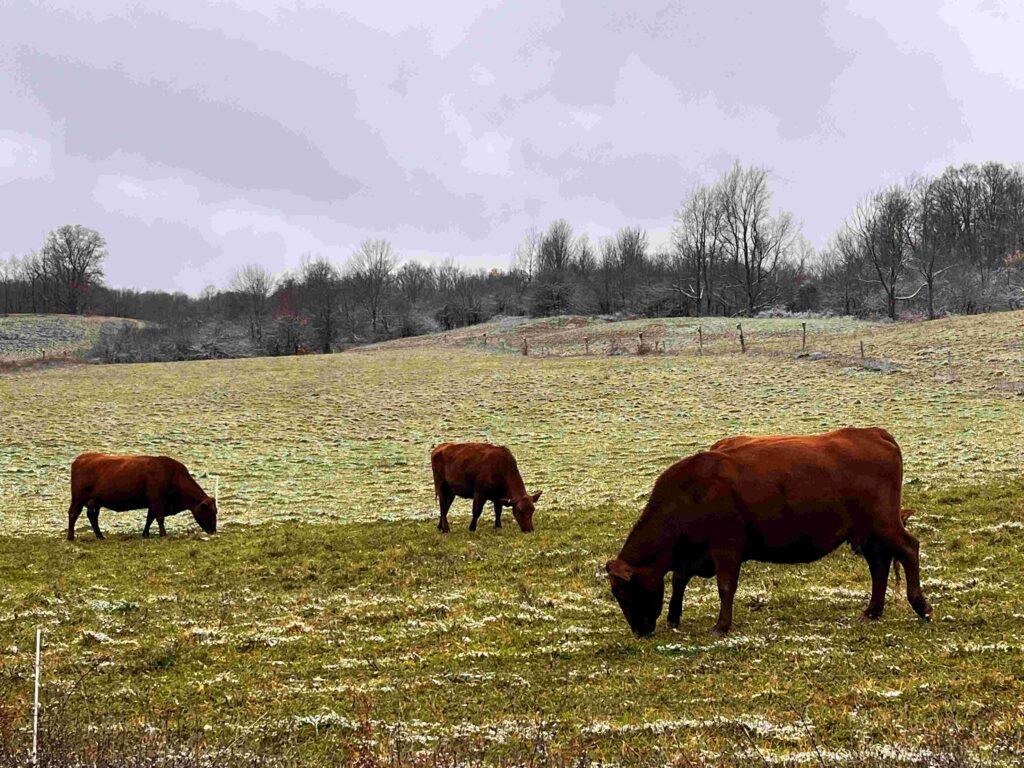
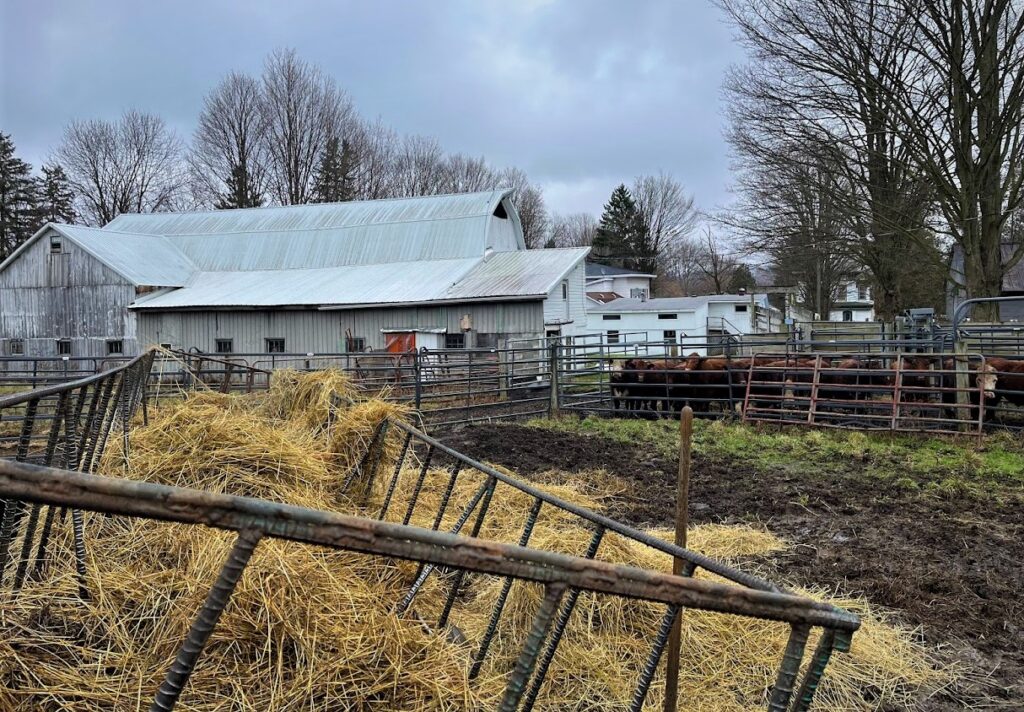
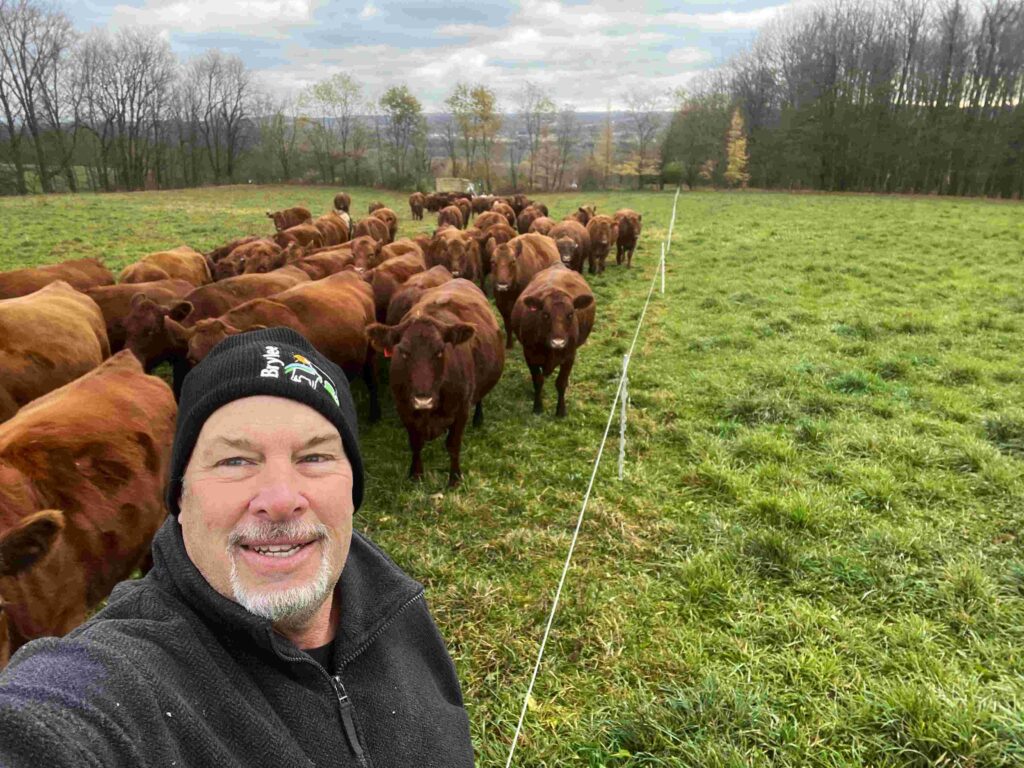
It infiltrates my mind and heart every fall when the group of cattle I conscientiously care for eat their last mouthfuls of fresh grass before going on to provide food for a nation. My chest tightens with pride at how healthy they look and that I have given them the best life possible. It is a day of reflection as they congregate in the corral to be loaded.
As a custom grazier (someone who grazes other farmer’s animals), it’s just another set of cattle, over 25 years of managing a group(s) of beef or dairy animals each year for a fellow farmer. We are a cog in the wheel of pastured protein production, providing a specific service along the production chain. Some would say the easier service, because bovines readily eat grass naturally and we get to give them back (as opposed to owning them) to their owner when the grazing season is over.
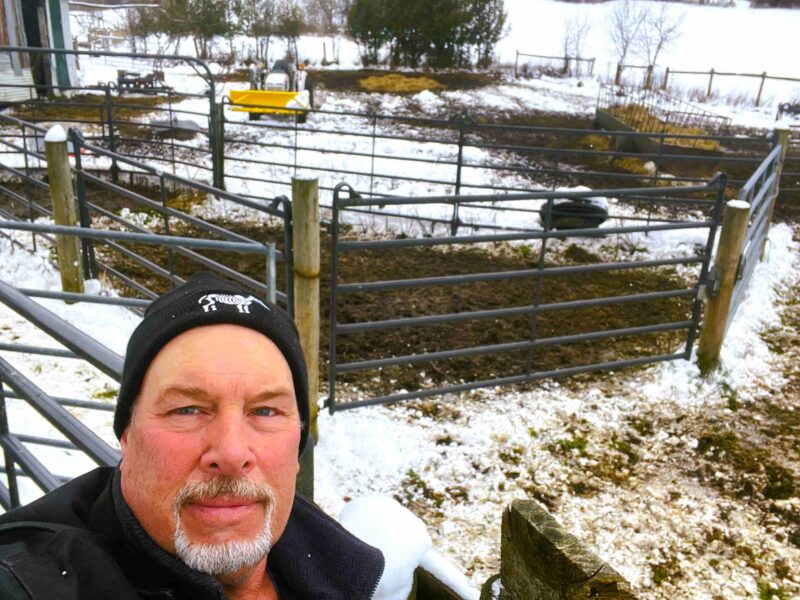
The problem is I’m emotionally attached and as I get older, this yearly ponderance starts to mirror my life metaphorically and I wonder when it’s gonna be my last grazing season. I had a 4-day hospital scare this year so it’s a bit raw, the emotion, as the cattle get on the trucks and a piece of me goes with them, until I’m left alone, covered with shit and empty pens.
The feeling sends me back 35 years, when the auctioneer emptied the barn of my precious milk cows (as it did for my grandfather), because the milk price was unsustainable for our farm to take on debt for America’s cheap food system. As a young dairy farmer who went to college, invested his whole being and energy into an enterprise, I was a casualty of a price I couldn’t control. Collateral damage really, that stung so much, it still haunts me today. That reality keeps me asking “leaders” about farm policies, in a “race to the bottom” narrative that string out farmers and rural communities.
It leaves me with a targeted chagrin from the “eye-rollers” who say I’m stuck in the past. Can we not learn from the past — “Lest we forget? “Ya gotta keep moving on”, they say. It’s true, but there are life’s stanzas when we need to reflect, to move forward, which is where I’m at today in the snow and mud of 2025 as the beef industry is apparently being scolded for taking a profit after years of not.
One would think—jubilation, at the thought of a cow-less winter and there certainly is. However, for an old farmer, it also signifies my identity leaving and life’s uncertain future, that can’t be captured on a grazing chart. When I reflect on my season and the grazing/life chart, it’s already a memory and a shoulda, woulda, coulda mindset.
Other than my loyal farm customer who works harder than I, my wife and I know the process and sacrifice of being a farmer and professional who works on the ground with peers in this farming narrative. We pray that our stewardship service to the land and honor and care of these animals will be appreciated in sacrifice for God’s bounty. I am saddened by many “un”-farmer authors and writers that take joy and make money by denigrating my bloodline of farming on national television and in tweets, without toiling one day in the real fields of agriculture created by a society that votes for cheap food, honoring nothing.
Yes, ladies and gentleman of agriculture, I have an affliction of doubt, right here in the mud, as I reflect on one’s life passion. Do I need therapy? Probably. Thank goodness, the pill of healing comes from reflections, healing and a sip of bourbon with my farming peeps who remind me of our role in this biological system called life. There is a certain bond between us farmers who can share a few tears of relief and respect about our awesome animals and the daunting challenges of connecting our critical craft with the consumer, who are generations removed from the farm.
For me, there is significant symbolism in this load-out day after 25 herds that give me pause to look at the bigger picture of life as the truck rolls out of sight. How will our work to hold topsoil and keep water on the land benefitting communities downstream be perceived? Will the power of pastured protein and nutrient density create smart minds? What will our legacy be beyond the farm gate? Did we do enough to foster a place where the 6th and 7th generations can thrive?
I think about how many more loadouts I have left, and time at the keyboard with 2 sausage fingers pounding away my thoughts in public. Will America support our stewardship and value which we bring to the table? My mentor, Kit Pharo reminds all of us, “Agriculture can’t be sustainable if “it’s not profitable and enjoyable.”
I also wonder how Mother Nature will perceive my stewardship; for someday I will be loaded out, returned to the earth and put to rest in green pastures.
I wanna know it matters. I gotta believe it matters what I do and that my community cares what farmers and I do 24/7. I/we owe these animals a tremendous amount of respect and sheer gratitude for turning sunshine, soil, water and grass into milk, meat and fiber to feed hungry microbes and a planet of people.
On these types of days, I contemplate the future. I dislike the vulnerability of being this emotional, but I need to vent internally and start anew. My friend Eli Mack likened this mind game to nature’s, “Disturbance leads to emergence”. Maybe it’s the silence as the snow covers the rawness of the moment and forces one to reflect out of respect for the thinking process that leads to healing, that frankly is needed for so many of us in the trenches. As NYS Ag. Commissioner, Richard Ball said the other day, “We are stronger together”.
And then there’s the rush of grief, remorse, remembrance or whatever you call it these days when you’re tired physically and emotionally, from the magnitude of a moment, where you just weep for no particular reason, other than it just happens.
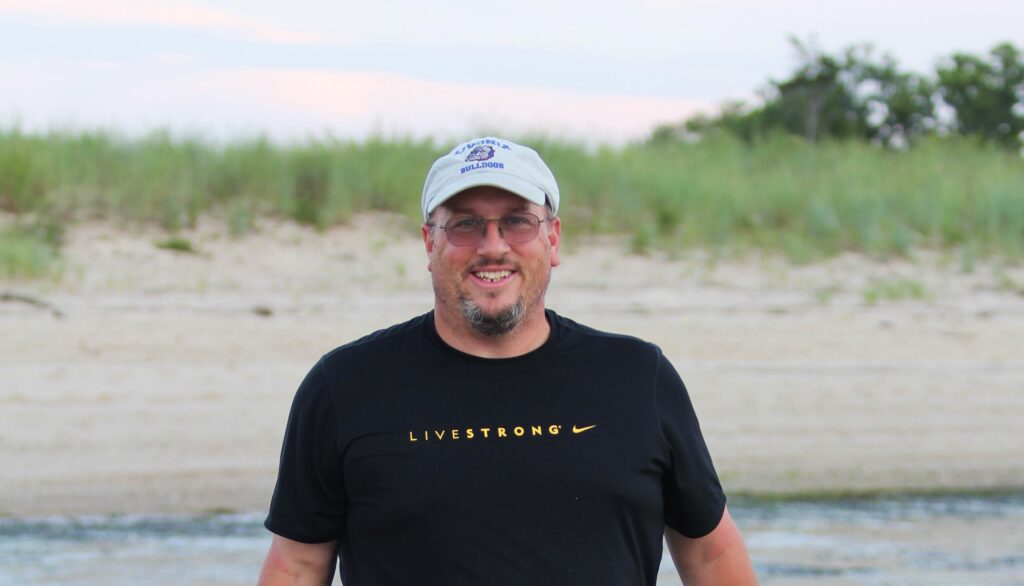
Circling the emotional, corral pen is when I think of my little angel brother, Scott, who left an indelible legacy on me of never quitting and giving big bear hugs. In this December moment, I think of my great grandparents, grandparents, my parents, my wife and rock, Corrine, my daughters, my sister-in-law, nephews, granddaughters and new grandson, Liam (short for William) who all grew up in some part of the farming life and how all our cumulative energies have nurtured this land the best we know how for over 135 years.
This story is powerful because it’s our legacy (and our farming peers), riding on the backs of the herd who turned sunshine and grass into soil. It’s a respect that deserves a pause today. It honors the FFA Creed: “I believe in the future of agriculture, with a faith born not of words but of deeds.”
As the snow softly mixes with my tears, it reminds me of resilience with the ability to recover, change and keep moving forward despite the physical, emotional, financial and worldly obstacles.
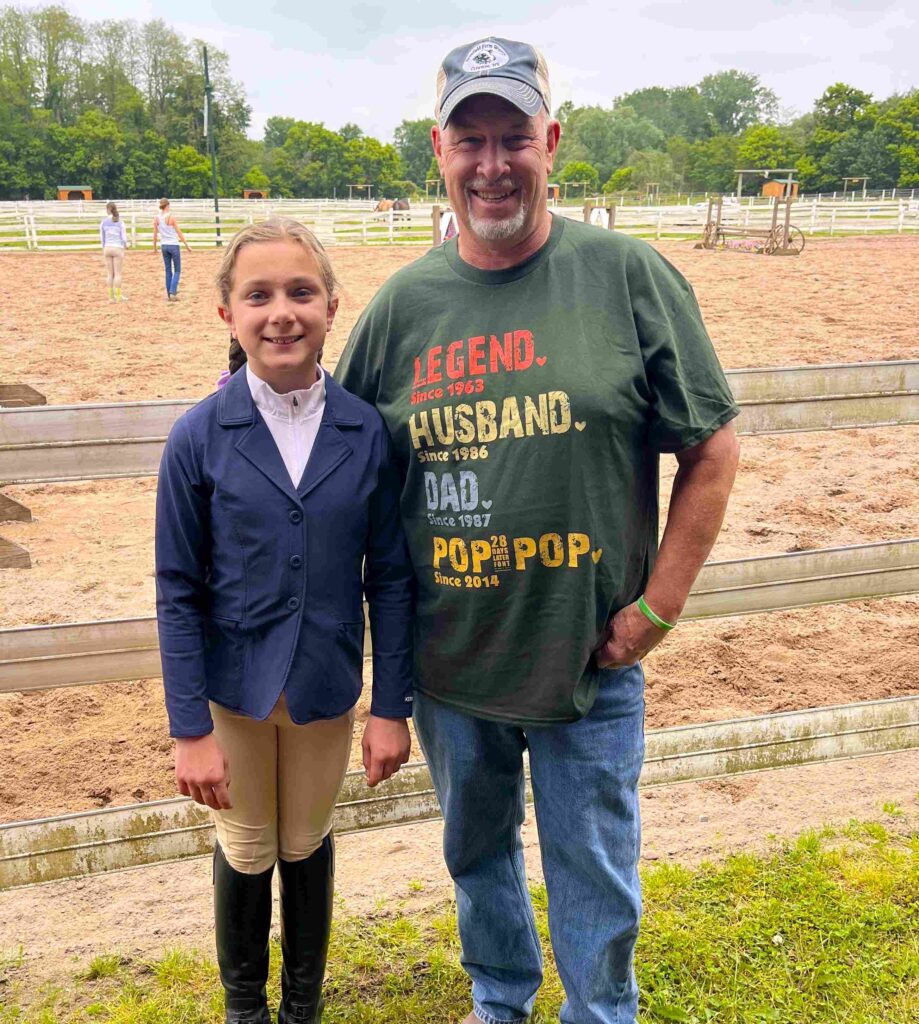
My emotional state may be slightly influenced by my granddaughter Hadley, who did us proud and wrote about our farm in a speech for the 2025 America’s Grasslands Conference in Nebraska: “When I walk through the fields on Bishopp Family Farm with my Nonna and Pop Pop, there’s something magical about the grasslands. The tall grasses sway like dancers in the wind, where the sound of buzzing bees and chirping birds feel like music to my ears”.
“Our healthy grasslands mean cleaner water in the watershed, which helps everyone who lives nearby and downstream in the cities—not just the farmers but all the families and schools around here. I like how the fields have an abundance of wildlife, from birds, deer and foxes. These animals get their food from the farm; so, the farm is an important part of their lives, as well as ours”.
“When I think about how much our farm does for the community, it makes moving cows with portable fence and planting trees with Pop Pop, feel like a way of saying thank you to nature. I have had a lot of great memories in the pastures on Nonna and Pop Pop’s farm. You see the grass on our farm means something. It’s not just grass, it’s our family’s and community’s treasure.”
Maybe it’s a feeling of pride that we did the best for others that resonates so deeply today. We put in the work on God’s great earth and that means something at this time of year. It means something to the Lord who watches over us, “If you will indeed obey my commandments that I command you today, to love the Lord your God, and to serve him with all your heart and with all your soul, he will give the rain for your land in its season, the early rain and the later rain, that you may gather in your grain and your wine and your oil. And he will give grass in your fields for your livestock, and you shall eat and be full. – Deuteronomy 11:13-15
Thanks for reading GW

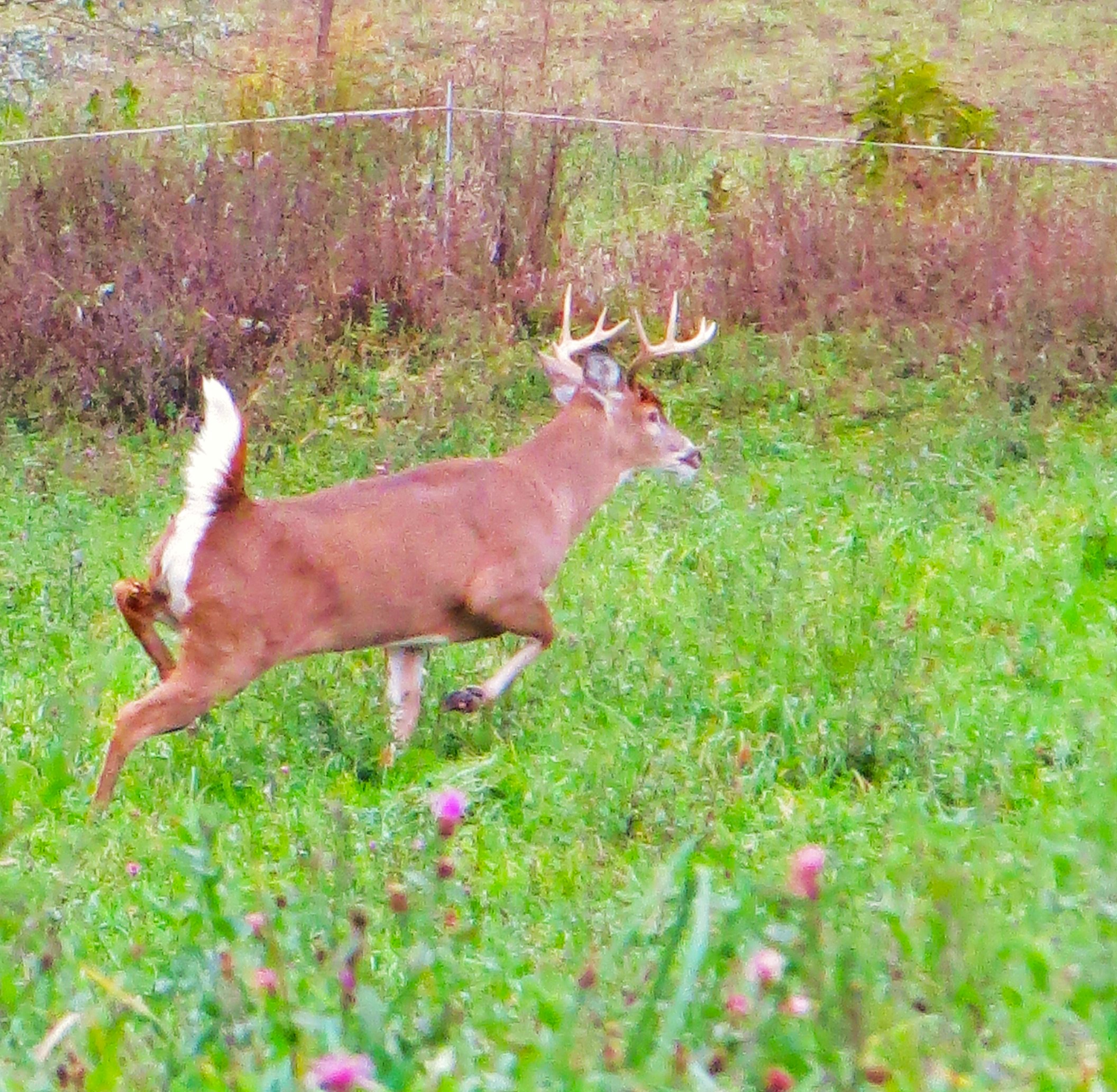 Grasslands and Hunters: A Positive Partnership
 »
»
A very eloquent and resounding piece for me emotionally too, as I wonder how many more years I will send my grass des pensioners home and who kept my little grassland into the future as my ancestors did. Best Wishes and God bless you and your family.